A famous Shinto shrine featuring an excellent garden
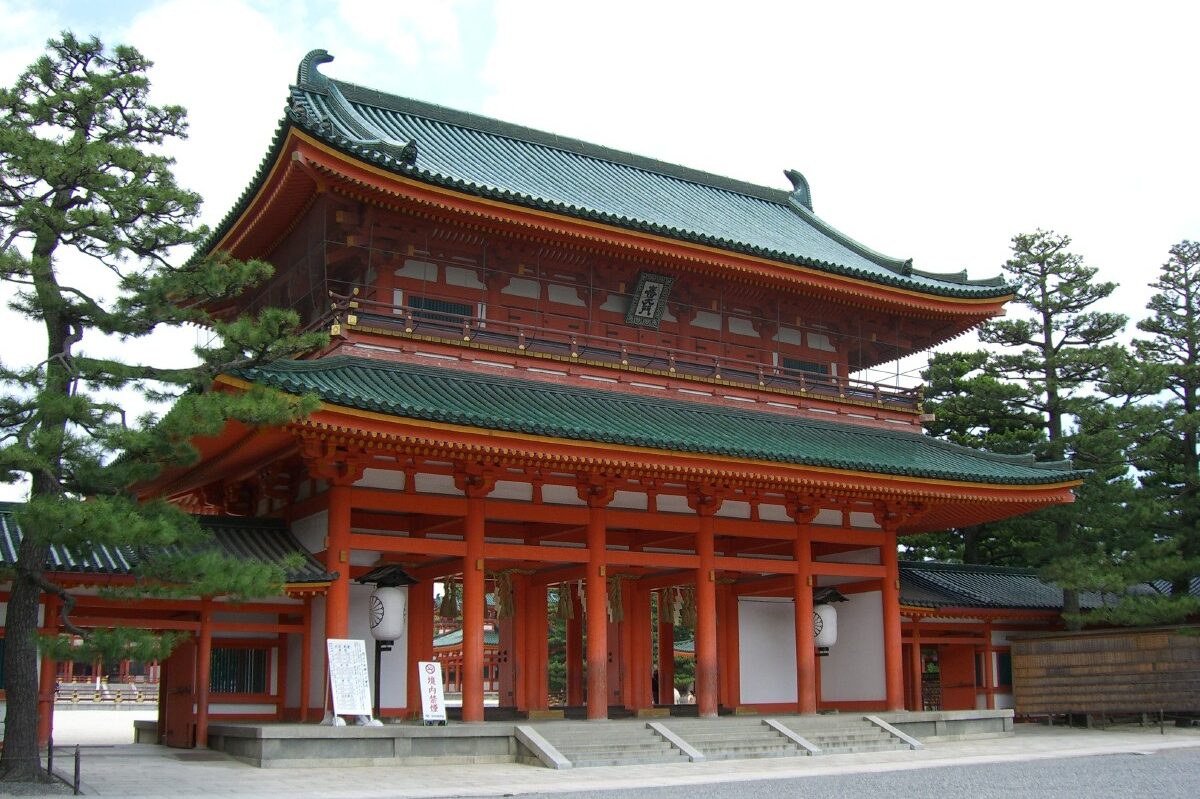
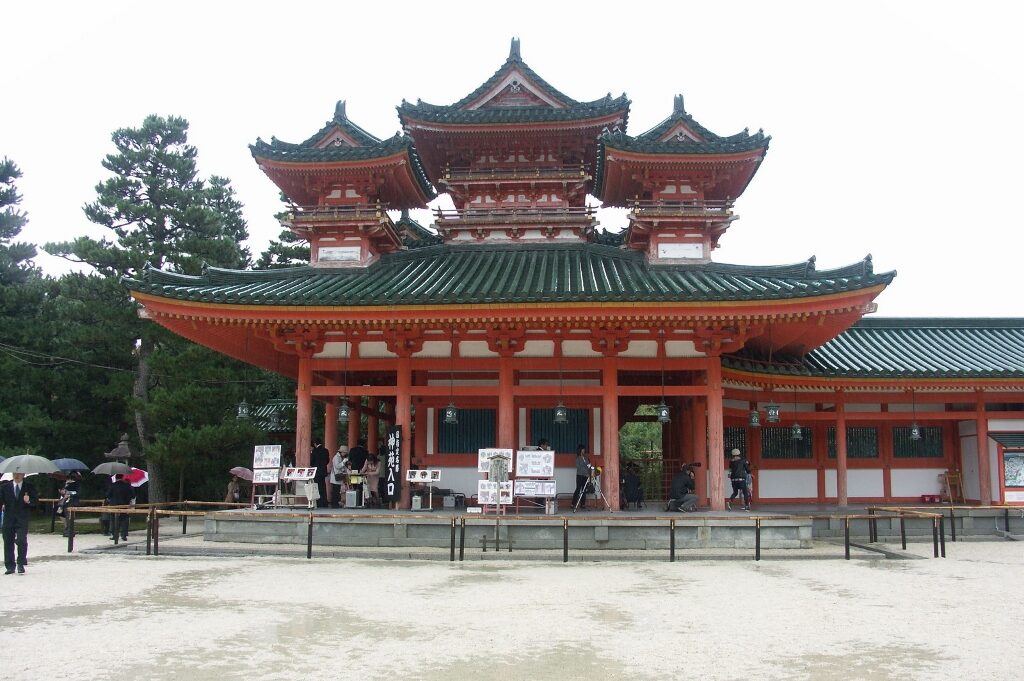
Heian-jingu Shrine was built in Sakyo-ku, Kyoto, in 1895 to commemorate the 1,100th anniversary of the capital’s transfer from Nara to Kyoto. Kyoto thrived as Japan’s capital for over a millennium until the modern government moved it to Tokyo after the fall of the samurai class. The capital’s relocation in 1868 led to a decline in Kyoto’s prosperity, but the people of Kyoto came together to revitalize the city by constructing Heian-jingu. In 1940, Emperor Komei (the last emperor to reign while the capital was in Kyoto) was enshrined here alongside Emperor Kanmu. Notable structures at the shrine include the striking red Byakko-ro (White Tiger Tower).
The Shin-en Garden
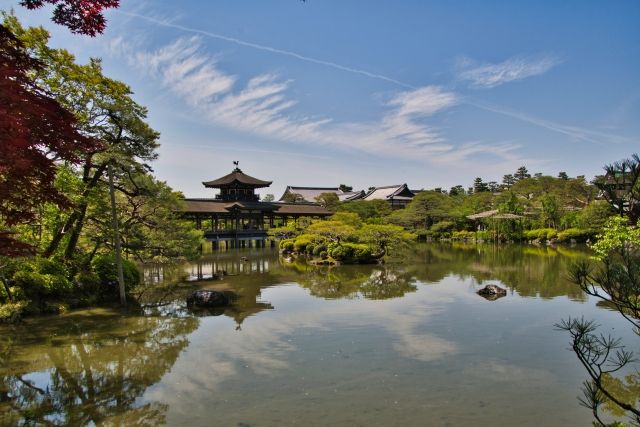
The Shin-en is a 30,000-square-meter round-pond garden, divided into four distinct sections, home to a wide variety of birds, from kingfishers to majestic falcons. The most stunning sight in the garden is the cherry blossoms in spring. Visitors can also admire irises in summer and enjoy breathtaking views of the pond from the roofed Taihei-kaku Bridge.
Late blooming cherry blossoms can be seen
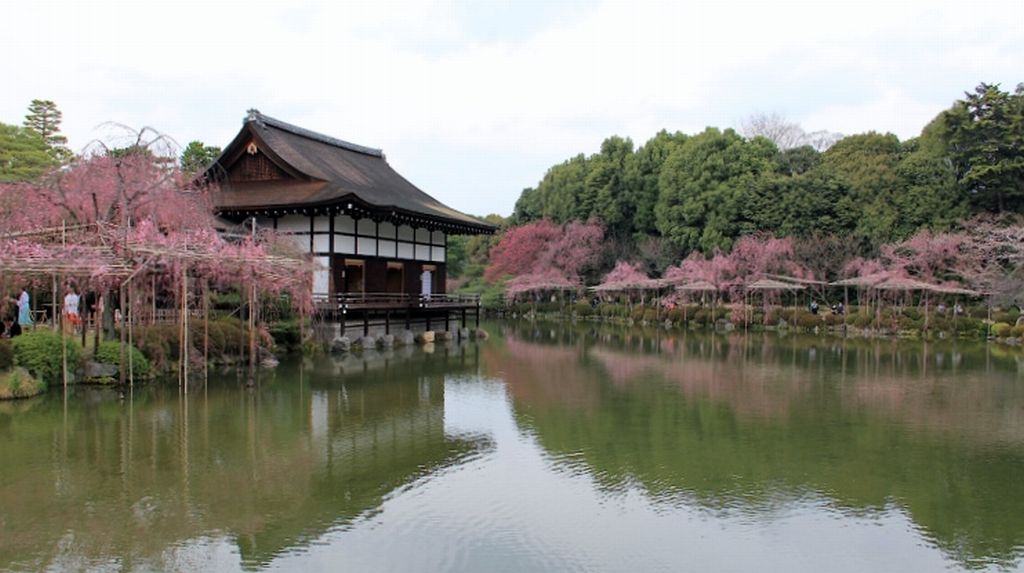
The garden of Heian Shrine is home to numerous weeping cherry trees (yaebeni shidare), making it one of the best spots in Kyoto to see these stunning trees. The blossoms here reach their peak a few days after other cherry trees.
This iconic cherry blossom location is featured in the famous novel Sasameyuki by Junichiro Tanizaki. During the cherry blossom season, the garden is illuminated, creating a magical atmosphere.
Otorii
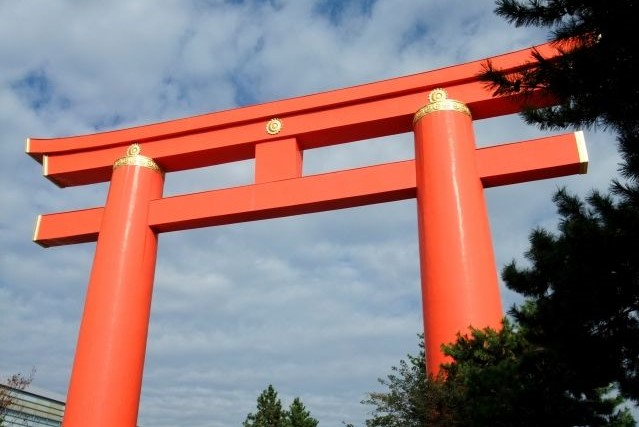
Heian-jingu Shrine is also renowned for its massive “Otorii” gate, a striking red torii that stands 24.4 meters tall at the entrance. This towering gate welcomes visitors along the approach to the shrine, leading them into Okazaki Park and toward the impressive vermilion Otemon Gate. When it was built, this torii was the largest in Japan and remains the tallest in Kyoto today.
Heian-Jingu Shrine(平安神宮)
Address : 97 Okazaki, Nishi-Tennou-cho,Sakyo-ku, Kyoto-shi, Kyoto
Access : 10 minute walk from Higashiyama station on the subway.
Bus : Take a bus no.5 or no.100 from JR Kyoto station to Kyoto-Kaikan Bijyutukan.
Hours : Open through the year
Admission : 600yen
Benefit : Keep evil away, Family protection,
Events
Setsubun Festival
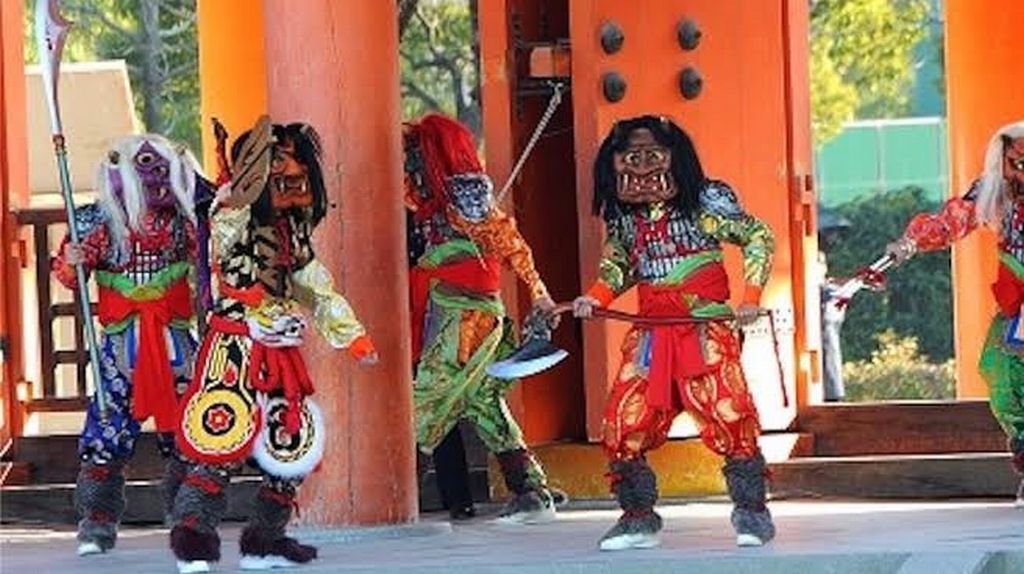
FEB 3 : The Setsubun festival is held to drive away evil spirits and welcome the arrival of spring. During the celebration, priests, geisha, and maiko throw lucky beans to the crowd, and if you’re lucky, you can catch them. The festival culminates in an impressive fire ritual, adding to the vibrant atmosphere.
Sakura Viewing Boat Ride
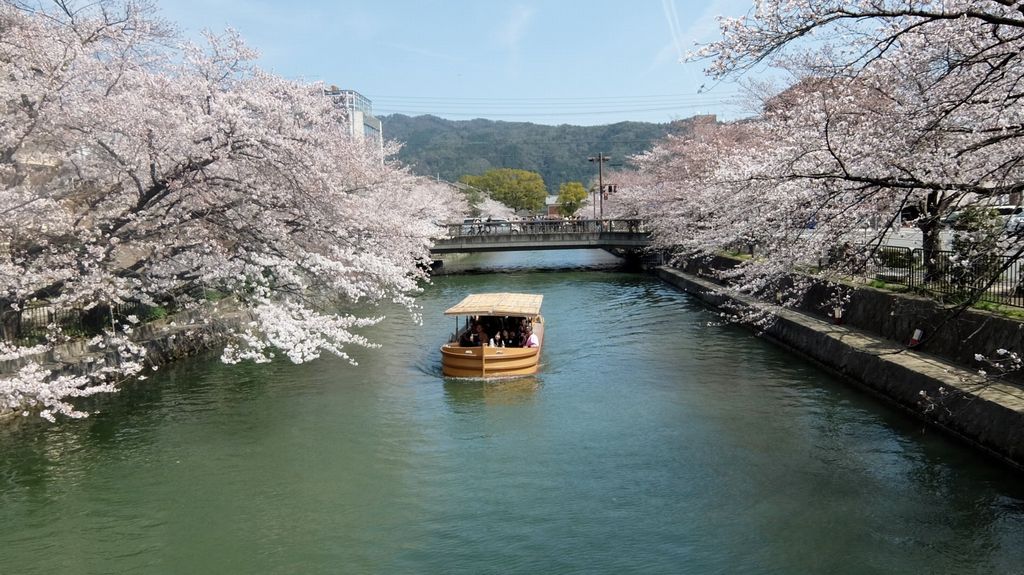
SPRING : Enjoy a 25-minute boat cruise celebrating the spring greenery and cherry blossoms along Okazaki Canal, located just outside Heian-jingu Shrine. The canal connects the Lake Biwa Canal network with the Kamogawa River, and cherry trees line the waterway along Reisen Street, stretching all the way to Nanzen-ji Temple. From the boat, the view of a large red torii gate framed by cherry blossoms is truly breathtaking.
Jidai Matsuri Festival/ 時代祭り
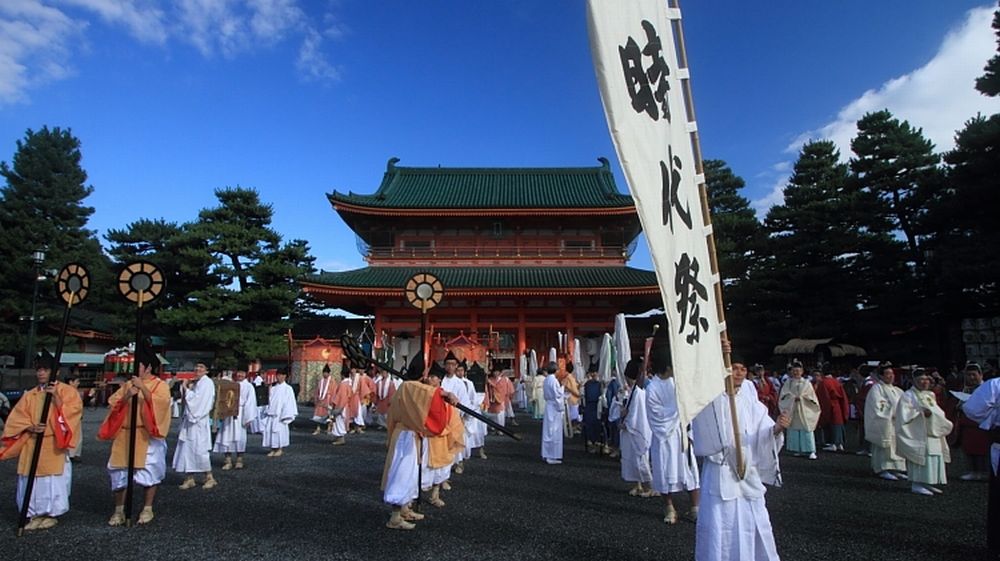
OCT : The Jidai Matsuri, held at Heian-jingu Shrine, is one of Kyoto’s three largest festivals. The highlight is the Jidai Gyoretsu (Historic Pageant), where a mikoshi (portable shrine) is carried through the city, accompanied by around 2,000 participants dressed in costumes representing various eras from Kyoto’s 1,200-year history.